 Anuloma Viloma Timer
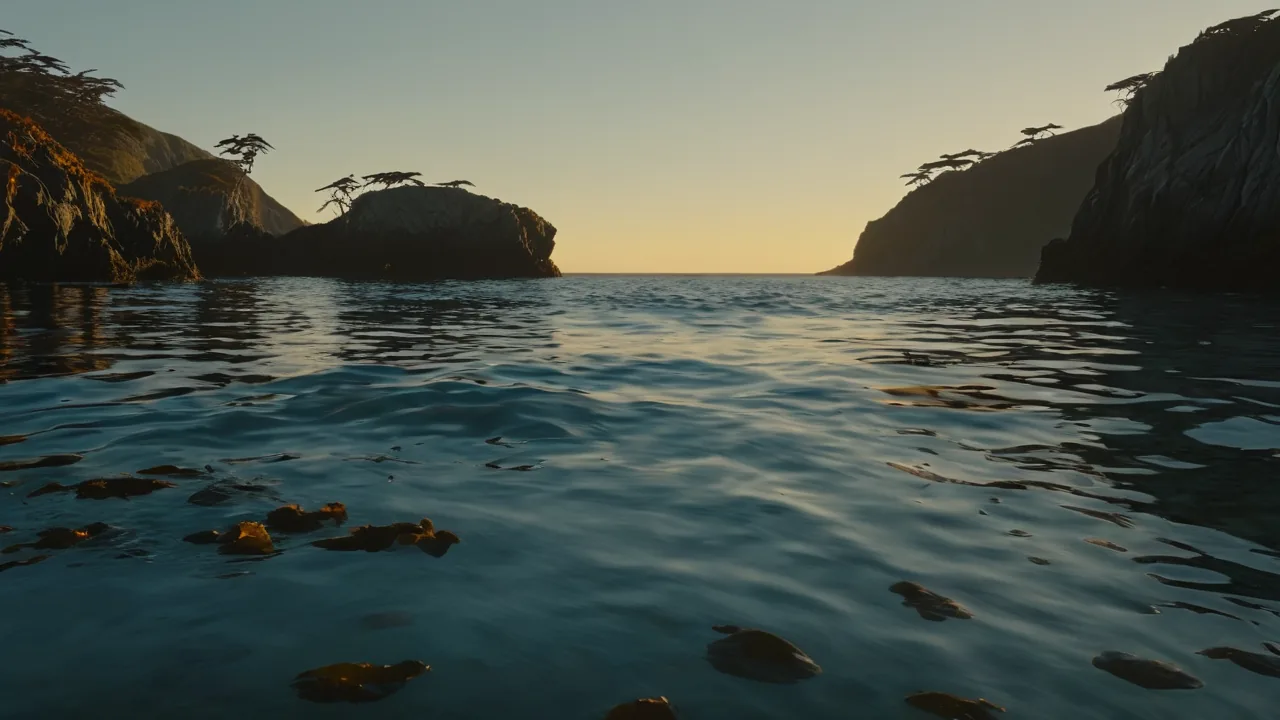
A sea otter dives on lungs more than twice the size of a land mammal its size, then floats on the same air.
That one sentence holds a small puzzle. Most of the famous breath-holders on this blog, the seals and the whales, go down with their lungs nearly empty. A hooded seal breathes out before a dive and lets its lungs compress as it descends. A sea otter does close to the opposite. It fills up, goes down, and comes back up on the same air that kept it afloat before the dive.
An animal with no blubber
Sea otters are the odd ones out among marine mammals. They have no thick layer of blubber. They stay warm with the densest fur of any animal, which traps a layer of air against the skin, and they stay buoyant largely with their lungs.
Those lungs are big. Estimates put them at about two and a half to three times the size you would expect for a land mammal of the same weight. A comparative review of diving physiology in Frontiers in Physiology (2018) lays out the pattern across species: deep divers tend to have relatively small lungs and rely on oxygen stored in blood and muscle, while shallow divers like sea otters have enlarged lungs and carry a large share of their dive oxygen as air.
That fits how sea otters live. They feed on urchins, crabs and clams on the sea floor of kelp forests and rocky coasts, usually not far below the surface. Dives are short, and the longest run to about five minutes. For a shallow forager, a big tank of air is both the oxygen supply and the float.
Two ways to hold a breath
So there are two broad strategies in the water.
The deep diver empties out. Less air in the lungs means less buoyancy to fight on the way down and less gas pressed into the blood at depth. The oxygen it needs is already locked in blood and muscle.
The shallow diver fills up. A full chest is a store and a life jacket at once, and the dive is short enough that the air is enough.
Pranayama has names for both. A pause after a full inhale is antara kumbhaka, the inner hold. A pause after the exhale is bahya kumbhaka, the outer hold. The Hatha Yoga Pradipika, written around the 15th century, lists eight kinds of kumbhaka and puts the held breath at the centre of the practice. Modern breath coaches sell the same pause as “CO2 tolerance training”. The label is new. The pause is not.
The fish that waits out the drought
Today’s other animal takes the idea somewhere stranger. The West African lungfish has a pair of lungs and has to reach air, or it drowns. When its swamp dries up in the dry season, it burrows into the mud and secretes a layer of mucus that hardens into a cocoon. The cocoon still lets air through. The fish slows almost to a stop and waits, sometimes for years, until the rain comes back. Guinness lists four years without food.
Neither animal is a model to copy. A sea otter’s five minutes and a lungfish’s four years are the result of millions of years of adaptation. They are reference points, not targets.
What the evidence says, honestly
It is tempting to tie a story like this to big health claims about the held breath. The research does not support that yet. A 2025 systematic review and meta-analysis of randomised trials of pranayama for mental disorders found a short-term benefit when pranayama was added to usual care, but rated the risk of bias as high and was clear that it is not a replacement for standard treatment (PMC12392162). The fair summary is that slow, controlled breathing practices are promising, low cost and pleasant for many people, and that the trials are still small and mixed.
What the practice can honestly offer is attention. A timed, calm hold asks you to notice the moment the urge to breathe arrives and to stay soft through it for a few seconds. That is a skill you can practise, and it does not need records.
A calm 28-second hold
Today’s practice video uses the classic 1:4:2 ratio for a single half-round of alternate nostril breathing:
- Sit upright on a chair or cushion. Never practise breath holds in or near water.
- Close the right nostril and breathe in slowly through the left for seven seconds.
- Close both nostrils and hold, gently, for twenty-eight seconds. Keep your shoulders down and your jaw loose.
- Release the right nostril and breathe out slowly for fourteen seconds.
If seven seconds in feels long, scale everything down: five in, twenty held, ten out. If you feel dizzy or strained at any point, stop and breathe normally. Do not breathe fast before the hold, and do not try to stretch it to a maximum. The point is a calm hold, not a long one.
Then notice what changed. Most people find the exhale after a held breath slower and smoother than usual, which is the quiet reward of the practice.
A sea otter fills its lungs to float and to forage. We can fill ours to sit still for half a minute. That is enough.
Anuloma Viloma Timer is free on the App Store. No subscription necessary.