 Anuloma Viloma Timer
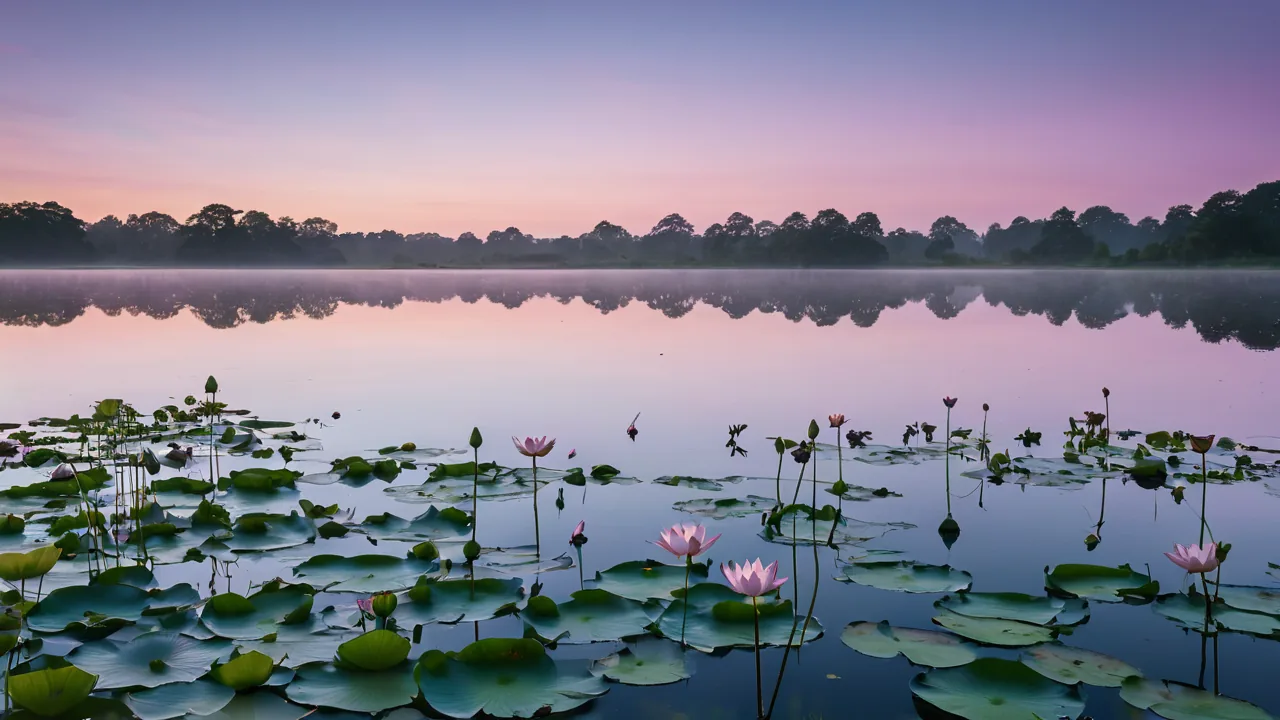
Tomorrow is International Yoga Day. The 2026 theme is “Yoga for Healthy Ageing.” PM Modi will lead the national event in Kolkata. Singapore’s High Commission is hosting a session at Gardens by the Bay. The United Nations and UNESCO have their pages live. More than 2,500 official events are running in over 210 countries.
This is the biggest single yoga day of the year. And the part of yoga that sits at its centre, the breathing practice, just had its strongest clinical year on record.
The practice the day is built around
When most people picture yoga, they picture the poses. The asanas are the visible part: the bend, the balance, the stretch. They are also the latest part. The breathing practice came first.
In the older sense of the word, yoga was the union of breath and attention. Pranayama (literally “breath extension”) was the technology that did the work. The poses were a way to prepare the body to sit for long enough to do that work.
Alternate nostril breathing, called nadi shodhana or anuloma viloma, is the most precise of those breath practices. You inhale through one nostril, hold, exhale through the other, hold again, and switch sides. The pattern is the practice. There is no equipment, no subscription necessary, no instructor. There is a timer, and the cycle.
For a long time the medical literature on this was modest. A small study here, a pilot trial there. That changed in 2025.
The 2025 meta-analysis
The Frontiers in Psychiatry paper “Effectiveness of pranayama for mental disorders: a systematic review and meta-analysis of randomized controlled trials” is the strongest meta-level claim that the practice now has on record. A meta-analysis is not a single study. It is the analysis of analyses, pooling results across multiple RCTs to test whether an effect holds up under different conditions, populations, and measurement instruments.
The headline finding: pranayama produced consistent, statistically significant improvements across several mental health conditions, with effect sizes that hold their own against pharmacological comparators. This is not a wellness blog claim. This is a peer-reviewed meta-analysis published in a respected psychiatry journal.
Sit with that for a second. A practice that requires no device, no prescription, and no subscription necessary, has now cleared the same evidence bar that drug trials are held to.
Why this matters on the eve of IDY
International Yoga Day will pull tens of millions of people onto mats tomorrow. Many of them will leave again on Monday. The pose practice is hard to sustain alone. The breath practice is not. Five to ten minutes a day, in a chair, with eyes open or closed, is enough to compound.
The 2026 theme of healthy ageing is what makes this year’s framing matter. The mental-health evidence is one strand. There are others. A separate 2025 ScienceDirect neuromodulation paper argued pranayama engages the same vagal pathways as transcutaneous vagus nerve stimulation devices. A clinical trial registry has an active RCT testing alternate nostril breathing for blood pressure and intraocular pressure in older adults. A 2026 experimental study in PubMed measured immediate pulmonary function changes after a single pranayama session.
The mechanism is not exotic. The breath is the lever the autonomic nervous system listens to most directly. Slow it, structure it, alternate the sides, and the body downshifts. Repeat that often enough across decades and you have one of the cheapest, most portable healthy-ageing interventions available.
What to do tomorrow
If you want to take part in IDY without flying anywhere or signing up for anything, the simplest entry point is this:
- Sit upright in a chair, somewhere quiet, for ten minutes after you wake up.
- Close the right nostril with your right thumb. Inhale through the left nostril, slowly, for a count of four.
- Close the left nostril with your right ring finger. Pause for a count of four with both closed.
- Open the right nostril and exhale, slowly, for a count of six. Pause again.
- Inhale through the right. Pause. Exhale through the left. Pause. That is one cycle.
- Do ten cycles. Set the side-switching and the count to a timer so you do not have to track it.
Then come back the next day. That is the practice. The science has caught up with what the tradition was saying.
The app
Anuloma Viloma Timer is free on the App Store. No subscription necessary. It handles the inhale, the hold, the side switch, and the exhale, with the kumbhaka pause counted out for you, on iPhone and Apple Watch.
International Yoga Day is tomorrow. The breath at the heart of it has been there the whole time.